WTA Stars Clash Over Five-Set Grand Slam Proposal
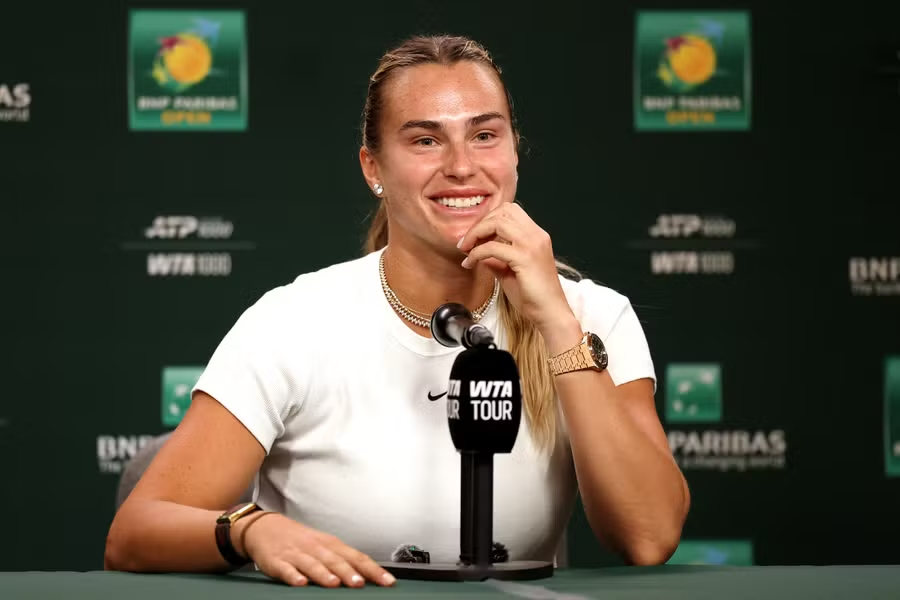
The debate over extending women's Grand Slam matches to five sets has ignited passionate responses from the WTA's elite, revealing deep divisions about the future of the sport. As players gather at Indian Wells, world number one Aryna Sabalenka's enthusiastic endorsement contrasts sharply with cautious skepticism from champions like Iga Świątek and Coco Gauff.
Sabalenka's Bold Endorsement
Aryna Sabalenka didn't mince words when asked about the proposal floated by incoming USTA chief Craig Tiley. "Yeah, let's do that," declared the four-time Grand Slam champion, her confidence radiating through the California sunshine. "I feel like I would have probably more Grand Slams. Physically I'm really strong, and I'm pretty confident that my body can handle that."
Sabalenka's support stems from her powerful baseline game and exceptional fitness—qualities she believes would give her an edge in extended matches. Her stance reflects a growing sentiment among some top players that women's tennis deserves equal billing in every aspect of competition.
The Tiley Vision
Craig Tiley, transitioning from Australian Open leadership to the USTA helm, sparked this conversation with a provocative statement to the New York Times. "All the research shows interest grows as the match goes on," Tiley argued. "As a sport, we need to evolve." His proposal suggests implementing five-set matches from the quarterfinals onward, creating what he believes would be more dramatic, memorable contests.
Gauff's Conditional Support
Reigning French Open champion Coco Gauff offered nuanced perspective, acknowledging the physical advantages she might enjoy while questioning the proposal's implementation. "I mean, it probably would favor me, because I'm physically up there with the best," Gauff admitted. "But if it were to happen, I would prefer it to be the whole tournament, not just the quarters."
Gauff's concern centers on competitive integrity. "Changing the format in the middle of the tournament defeats the purpose of the playing field," she explained, suggesting that any format change should apply uniformly throughout the event.
Świątek's Forceful Opposition
World number two Iga Świątek delivered the most comprehensive critique, questioning everything from audience appeal to physical sustainability. "I think honestly it's a weird approach in a world where everything is becoming faster," the six-time Grand Slam champion observed. "I don't know if the audience honestly would like that."
Świątek raised practical concerns about quality maintenance over five sets and highlighted physiological differences. "Men are more physically strong and they can handle it for sure better," she stated bluntly. Her most significant warning involved scheduling: "We would need to change our whole calendar because the Grand Slams would be so tough that I don't think we would have honestly time to prepare for any other tournaments."
Pegula's Practical Concerns
Jessica Pegula echoed Świątek's logistical worries while acknowledging women's athletic capabilities. "I think we have amazing female athletes that honestly I think we could do that," the world number five affirmed. "I don't think it's the fact that we can't; I just don't necessarily think that we should."
Pegula focused on the tournament structure implications. "We'd have to add weeks. We can't even get through the schedule now. So I'm not really sure for like a fan experience how that would really work." Her comments reflect broader concerns about an already packed WTA calendar and player welfare.
The Broader Implications
This debate transcends mere format changes, touching on fundamental questions about women's tennis identity, commercial appeal, and athlete welfare. Proponents argue extended matches could increase drama and revenue, while opponents worry about physical toll and viewer engagement in an attention-scarce era.
As the discussion evolves, savvy fans looking for insights into how these changes might affect upcoming tournaments should check our comprehensive football predictions for comparative analysis of format changes across sports.
Looking Ahead
The five-set proposal faces significant hurdles beyond player opinion. Tournament scheduling, broadcast agreements, and historical tradition all weigh against rapid implementation. Yet the mere discussion represents tennis' ongoing evolution, with stakeholders grappling with how to enhance the sport's appeal while protecting its athletes.
What's clear from Indian Wells is that women's tennis features diverse, thoughtful voices capable of shaping their sport's future—whether through powerful groundstrokes or powerful opinions.